
The Basics of Getting Things Done®
"Your mind is for having ideas, not holding them." — David Allen
Why Most Productivity Tools Fail
If you are struggling to stay ahead of your workload, the problem isn't your apps. What is missing isn't another to-do list manager or an AI assistant, it's a reliable, systematic way to process and act on everything competing for your attention.
GTD is a proven workflow methodology that helps you capture, organize, and execute your commitments with absolute clarity.
Instead of constantly reacting to whichever demand feels the loudest, GTD closes your mental "open loops"—the background clutter that quietly drains your daily cognitive energy—giving you total confidence that nothing important is slipping through the cracks.
The 5 Steps of GTD
The core methodology organizes the chaos of your workload into five simple, continuous steps:
[ Capture ] ➔ [ Clarify ] ➔ [ Organize ] ➔ [ Reflect ] ➔ [ Engage ]

Step 1
Capture
Write, record, or gather anything and everything that has your attention into trusted external buckets.

Step 2
Clarify
Decide if an item is actionable. If yes, define the very next physical action. If no, trash it, file it as reference, or put it on hold.

Step 3
Organize
File your next actions, projects, and reference materials into the right place so they are ready when you need them.

Step 4
Reflect
Regularly review your system. Completing a Weekly Review® is the critical rhythm that updates your lists and resets your focus.

Step 5
Engage
Use your trusted system to confidently choose exactly what to do next in any given moment.
Beyond the Ground Level: The Higher Horizons
Once your daily tasks and active projects are under control, you gain the mental bandwidth to look further ahead. GTD maps your focus across five higher horizons:
The Book Explains the Method. Coaching Makes It Stick.
While David Allen’s international bestseller Getting Things Done provides the definitive blueprint, implementing it alone amidst a demanding career can be difficult.
As an Amazon Associate, GTD Focus earns a small commission from qualifying purchases at no additional cost to you.
Coaching bypasses the trial-and-error phase, building these steps directly into your specific role, active tools, and unique cognitive preferences.
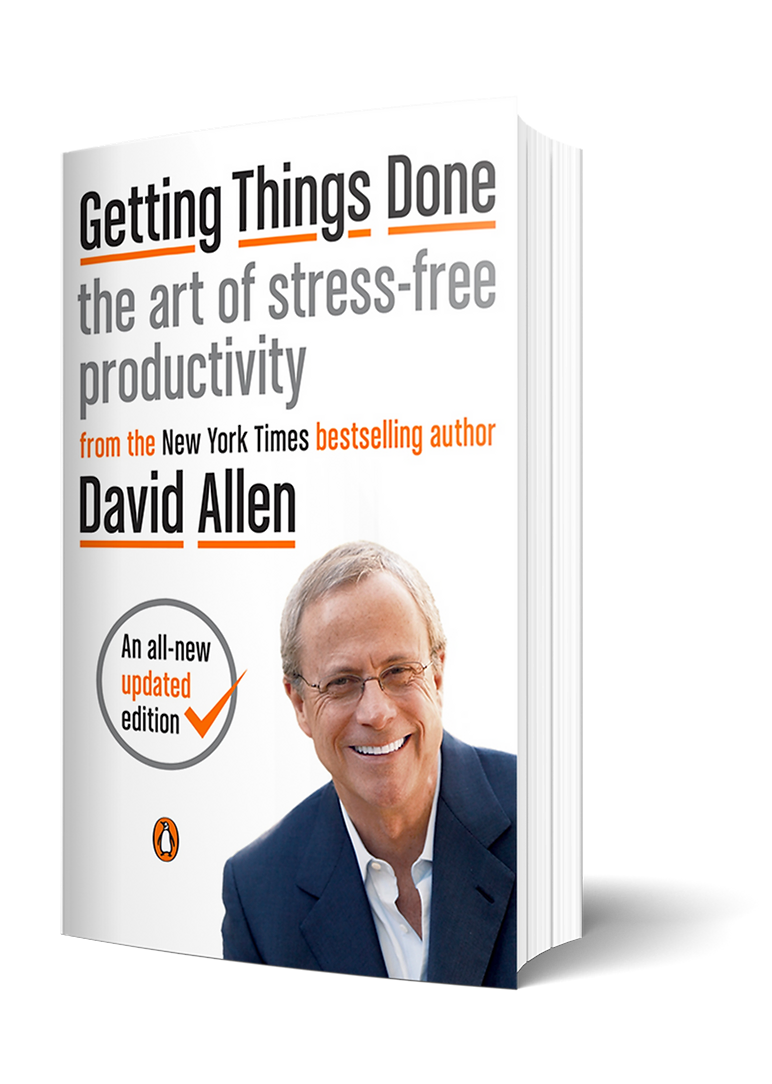
Turn theory into a trusted daily practice
Let’s connect for a brief call to evaluate your current workflow challenges and discuss how one-on-one coaching can help you incorporate the five steps.
One-on-one GTD workflow coaching for driven professionals across North America. We help you move everything out of your head and into a trusted personal operating system, freeing up the space you need to focus on the work that matters and the people you care about most.
GTD®Gems Newsletter
By signing up, you agree to receive marketing emails from us. You can unsubscribe at any time.
© 2026 GTD Focus. All Rights Reserved.
GTD Foundation, GTD Strategy, GTD Integration, GTD Vision & Refocus, and GTD Five Horizons are proprietary one-on-one coaching services of GTD Focus.